
Improving health care by inspiring a balanced exchange of evidence, experience, and perspectives.
About Us
The Alliance for Health Policy is a nonpartisan, nonprofit organization dedicated to helping policymakers and the public better understand health policy, the root of the nation’s health care issues, and the trade-offs posed by various proposals for change.
We believe a better health care system begins with a balanced exchange of evidence, experience, and multiple perspectives.
Signature Series
Courageous Conversations. Innovative Events.
The annual Signature Series addresses challenging issues in health policy by convening cross-sector dialogue with experts in both policy and practice. Together, we critically examine and identify what’s at stake, as well as key areas of opportunity.
This year’s theme focuses on the transformative power of Artificial Intelligence (AI) in health care and health policy.
Explore Events
The Alliance serves as a trusted resource, empowering current and future health policy leaders to improve the nation’s health care system by advancing their understanding of the issues that matter and by convening them in solutions-focused conversations.
Sign up to receive invitations to future Alliance events.
Event Description This roundtable featured former journalists and health care professionals to explore the current value-based care landscape, highlight anticipated policy discussions for the coming year, and identified key considerations for reporters and media experts. Learning Goals This event was made possible with support from the National Institute for Health Care Management (NIHCM).
This event featured an analysis of potential health policy priorities at both state and federal levels for this upcoming election year, and provided a review of major legislative milestones from 2023 and their potential implications for 2024.
Thank you to those who were able to join us for our 2023 Annual Dinner. The evening was a time to network, connect and learn at the speed of trust about the road ahead.
Resources For You
Policymakers
Members of Congress, Congressional and agency staff, federal, state, and local legislators.
Health Care Stakeholders
Industry stakeholders, practitioners and providers, patient advocates, community organizations, academics.
Media
Members of the press, journalists, public relations professionals.
Discover Topics
The Alliance takes a “listening first'' approach, gathering insights from the health policy community and health care stakeholders to clarify and synthesize current issues and create a forum for dialogue to advance the conversation for improving health and health care in the United States.
In the Spotlight

A health insurance program for aged persons designed to complement the retirement, survivors, and disability insurance benefits under Title II of the Social Security Act. It covers most persons aged 65 and over.

Health care costs can be defined in three ways: 1) the expense incurred by providers in the delivery of health care services 2) the amount that is paid for services rendered by private and public payers; and 3) out-of-pocket patient spending for health care services.

Medicaid provides health coverage to millions of Americans, including eligible low-income adults, children, pregnant women, elderly adults and people with disabilities.The Children’s Health Insurance Program (CHIP) provides health coverage to eligible children, through both Medicaid and separate CHIP programs. CHIP is administered by states, according to federal requirements. Both programs are funded jointly by states and the federal government.
Featured Resource
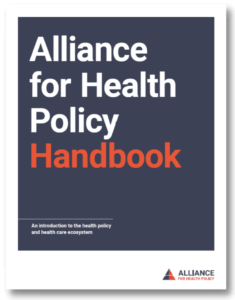
Health Policy Handbook
An introduction to the health policy and health care ecosystem
Newsroom
Get the highlights of programs, conversations, and content, and the latest updates at the Alliance.
Alliance for Health Policy Thought Leader Workshop kicks off 2024 Signature Series, tackles AI in Health
FOR IMMEDIATE RELEASE For media inquiries related to the Alliance, please contact Madeline Pennington, mpennington@allhealthpolicy.org. For more information on sponsorship or partnership opportunities, please email Kelly Appenzeller, kappenzeller@allhealthpolicy.org. Washington, D.C. — The Alliance for Health Policy hosts its inaugural Thought Leadership Workshop today, April 25, launching the yearlong 2024 Signature Series program focused on AI […]
Connect With Us
The Alliance invites everyone to engage with us on health policy issues. Select your interest areas here to receive invitations and resources of interest to you.
We also welcome the opportunity to collaborate and partner with organizations in all sectors. For more information about partnering with the Alliance for Health Policy, please sign up here.
Our Vision for the Future